The seven shifts of the last 6 months that most change how researchers can use AI in their research work.
SECTION OBJECTIVES
Name the shifts in AI capability most relevant to academic research.
Distinguish reasoning models, agentic research modes, and source-grounded notebooks.
Identify which trend most changes a workflow you already do weekly.
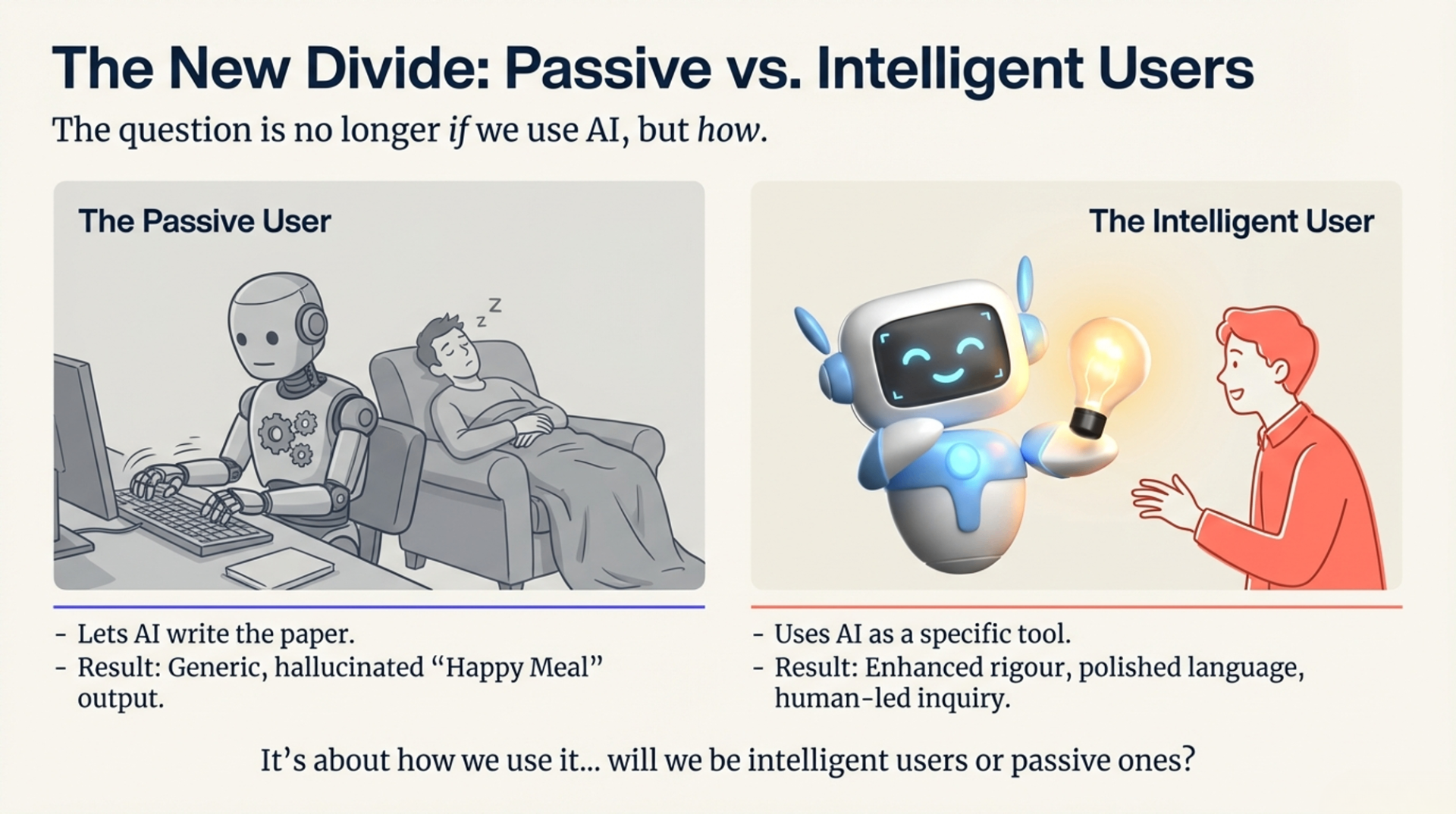
The question is no longer if we use AI, but how.
AI research tools have moved from 'autocomplete with citations' to genuinely agentic collaborators in under two years. For researchers, the practical question is no longer whether to use them, students and reviewers already do, but how to use them rigorously enough to defend in a methods section, a viva, or a peer review.
01
Reasoning models become the default
GPT-5.5, Gemini 3.1 Pro, and Claude's extended-thinking modes (Opus & Fables) now plan before they answer. And all now comes with the size of 1 million tokens. But the trade-off is latency and cost (limits). Use reasoning models for synthesis, critique, and methods work; use fast models for triage and reformatting.
02
Agentic deep-research workflows
Gemini Deep Research, ChatGPT's research mode, and Claude's research-grade Projects can plan a multi-step investigation, browse 50+ sources, and return a structured citation-backed brief. This is the largest single productivity shift for literature work since Google Scholar.
03
Source-grounded notebooks (Gemini Notebook and peers)
A new product category: tools that refuse to answer beyond the sources you upload, with click-through citations to the exact passage. Hallucination drops sharply. Best for assigned-reading work, focused literature reviews, and qualitative analysis where provenance is non-negotiable.
04
Multimodal research assistants
Frontier models now read PDFs (including math), interpret figures, transcribe long-form video, and reason about tables. This unlocks systematic review of figure-heavy literatures, automated alt-text for accessibility, and analysis of qualitative video data. Workflows that were impractical 6 months ago.
05
The shift to context engineering
The skill that separates good and great AI users is no longer prompt wording. It is what context you assemble around the model: which sources, which examples, which role, which output schema, which refusal rules. The rest of this workshop is, in effect, applied context engineering for three tools.
The Ethical Lens
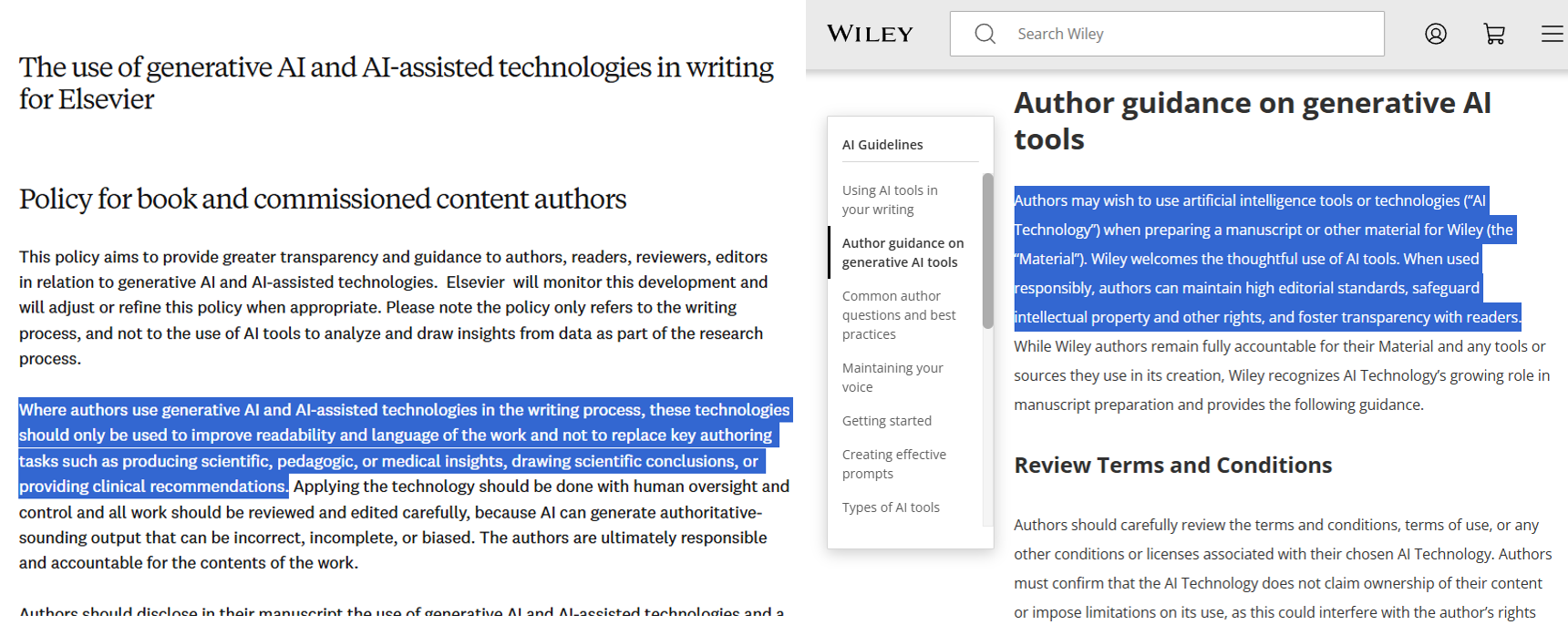
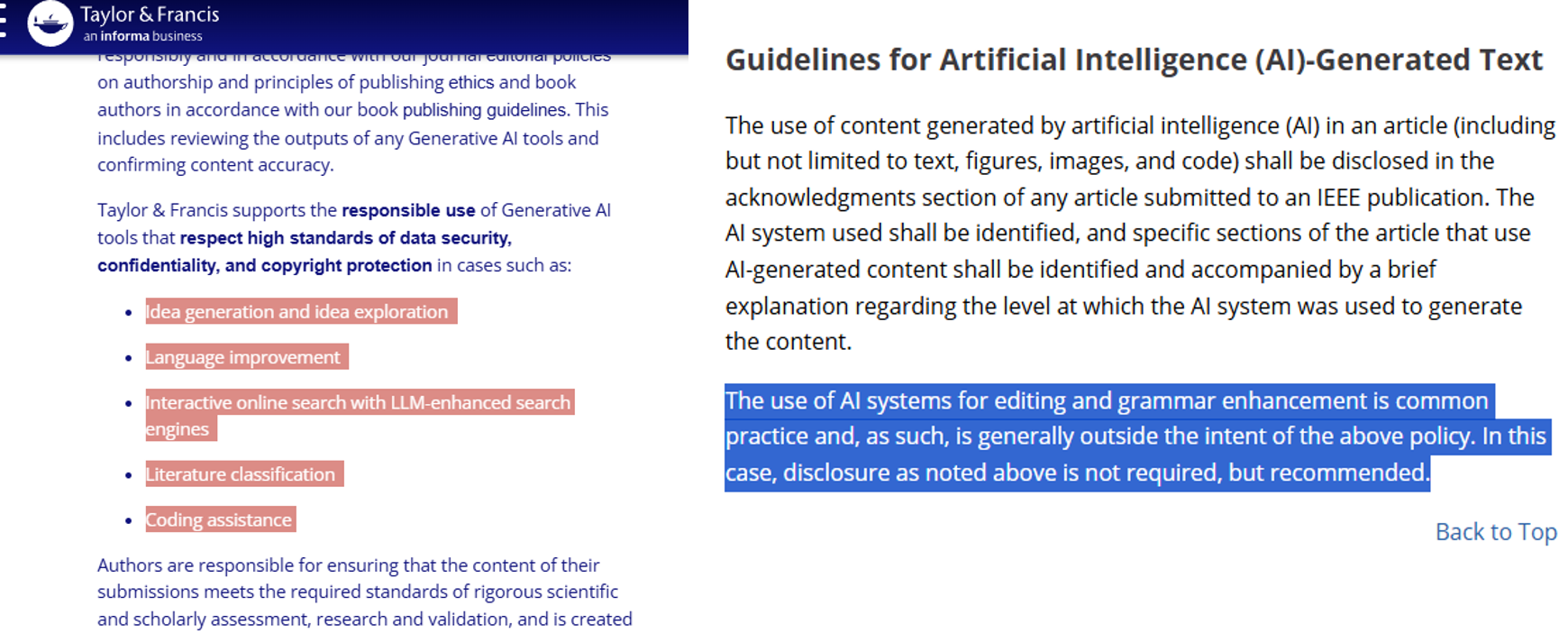
Across Elsevier, Wiley, Taylor & Francis and IEEE the message is consistent: AI is accepted for language editing, readability and writing improvement, but not for producing scientific insights, drawing conclusions, fabricating data, or claiming authorship. You remain fully accountable for the work, and disclosure of AI use is expected (and in some cases required).
Elsevier & Wiley — AI for readability and language, with human oversight.Taylor & Francis & IEEE — responsible use, with disclosure expected.